
When you think of Dubai, you might picture skyscrapers, luxury malls, or desert safaris. But behind the glitter, there’s a quieter side of the city that runs on digital networks-specifically, social media’s role in the escort industry. It’s not about glamour or fame. It’s about survival, visibility, and shifting norms in a place where traditional advertising is banned but online presence isn’t.
How Social Media Replaced Traditional Methods
Before smartphones and Instagram, escort services in Dubai relied on word-of-mouth, private clubs, or discreet phone lines. If you wanted to find someone, you needed a connection. Today, that’s changed. Platforms like Instagram, Telegram, and Snapchat have become the new storefronts. A profile with curated photos, a bio with emojis, and a link in the bio replaces a printed flyer or a phone number passed at a bar.
It’s not illegal to have an Instagram account. But using it to offer sexual services? That’s where things get blurry. Dubai law prohibits prostitution, and advertising it is a crime. Yet, many accounts operate under coded language: "companion," "private dates," "evening arrangements." They don’t say "escort." They say "I love exploring the city with great company."
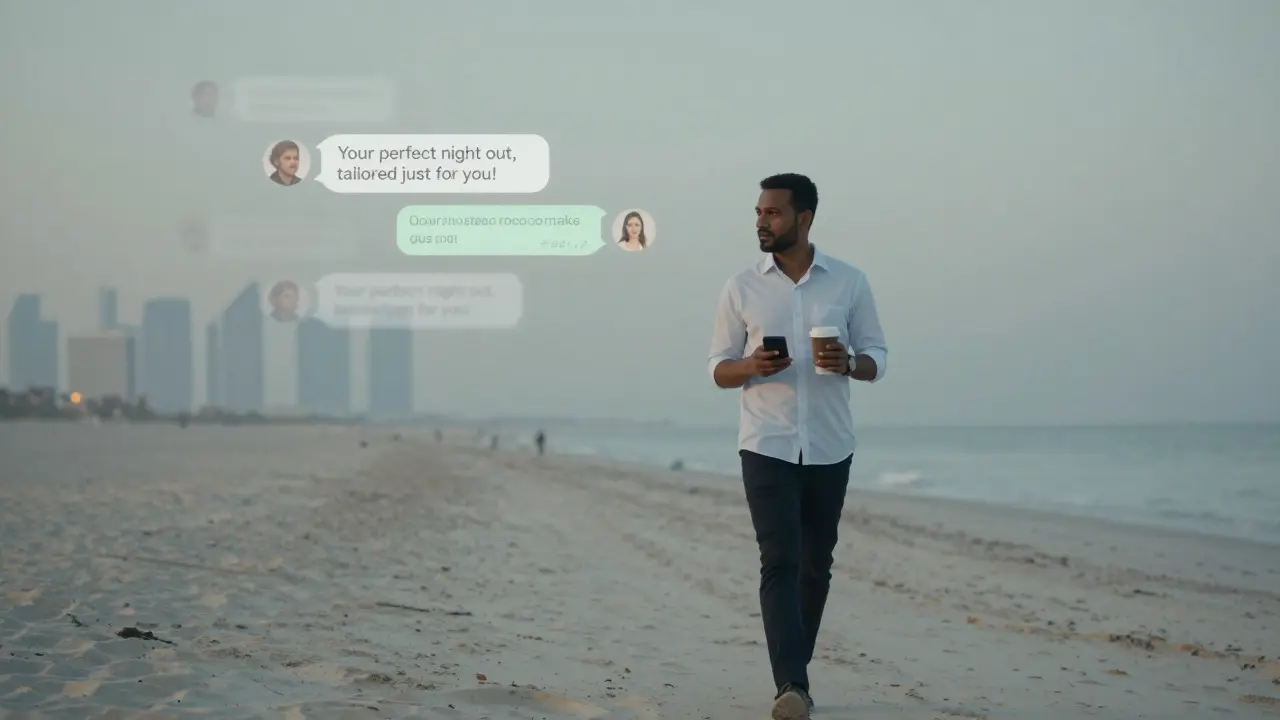
One user, who asked to remain anonymous, told me their profile started as a travel blog. Then, over six months, the content shifted. Photos of rooftop dinners became photos in designer lingerie. The captions changed from "Sunset at Burj Khalifa" to "Your perfect night out, tailored just for you." No explicit offers. No prices listed. Just enough to attract the right audience.
The Algorithm Doesn’t Care About the Law
Social media platforms have rules. Instagram bans sexual solicitation. Telegram allows private channels. But enforcement is inconsistent. Accounts get suspended, but new ones pop up within hours. The same person might have three profiles: one on Instagram, one on Telegram, one on a private WhatsApp group. They rotate them. Delete. Recreate. It’s a game of cat and mouse-and the algorithm doesn’t care who wins.
What’s surprising is how targeted the ads are. If you’ve ever searched for "Dubai nightlife" or clicked on a post about luxury hotels, you’ll start seeing accounts that look like influencers but offer more than just photos. The platform doesn’t know what you’re looking for. But it knows what you click on. And that data gets used.
Some users report being contacted by strangers who say, "I saw your profile, I think we’d get along." These aren’t random messages. They’re the result of behavioral tracking. Someone’s engagement history-likes, saves, time spent-tells the system what kind of content they’re drawn to. And that’s how these services find clients.

Who’s Using These Services?
It’s easy to assume this is all about tourists. But that’s not the full picture. A large portion of clients are expats living in Dubai-engineers, bankers, doctors-who work long hours and feel isolated. Others are local men who don’t want to be seen in public places. Then there are women who use the same platforms to find companionship, not just sex.
One 34-year-old British expat working in fintech said, "I don’t want a hooker. I want someone to talk to, to have dinner with, to feel human with. I’ve been here three years. I don’t know anyone outside my office." He found someone through a private Telegram group. They met once a month. No sex. Just conversation, coffee, and a walk along the beach.
That’s not the stereotype. But it’s real. And it’s why these services don’t just offer "dates." They offer connection. The language has changed. So has the demand.
How Profiles Are Built and Maintained
Building a profile isn’t about being beautiful. It’s about being consistent. A successful account posts at the same time every day. Uses the same filters. Has a color theme-soft pinks, golds, dim lighting. The goal isn’t to look sexy. It’s to look *reliable*.
Many use AI tools to write captions. Others hire editors who specialize in "discreet marketing." They know exactly how to say "I enjoy fine dining and quiet evenings" without triggering Instagram’s filters. They avoid words like "money," "price," or "service." Instead, they use "experience," "time," "company."
Photos are taken in controlled environments: hotel rooms with neutral walls, luxury lobbies, or private villas. No landmarks. No logos. No identifiable background. Even the clothes are chosen for their lack of branding. A black dress. White sneakers. No visible logos. It’s camouflage.
Some even use fake names. Not to hide, but to avoid being traced. One woman I spoke with used the name "Luna" for three years. She never used her real name, never posted her face clearly, and never gave out her number. She communicated through encrypted apps. Her entire business ran on DMs and scheduled meetups.
The Risks Are Real
Just because it’s online doesn’t mean it’s safe. There are scams. Fake profiles. People who take money and vanish. Others who record encounters and threaten to share them. There are also reports of law enforcement monitoring these accounts-not to shut them down, but to catch traffickers or underage individuals.
In 2024, Dubai police arrested three people for running a network of fake escort profiles that collected payments from over 200 men. The profiles looked real. They had fake IDs, staged photos, and convincing bios. But they were bots. No real people involved. Just automated messages and stolen images.
For those who do operate honestly, the fear is constant. One escort said, "I’ve been doing this for five years. I’ve never been caught. But I sleep with one eye open. I know what happens if I get reported. I lose everything. My job. My apartment. My freedom."
What’s Next?
The industry isn’t going away. It’s evolving. More people are moving to private apps like Signal or Discord, where content isn’t monitored. Some are using blockchain-based platforms that encrypt identities. Others are starting subscription services-paying monthly for "exclusive access" to a private feed.
There’s also a new trend: "ethical escorting." Some providers now offer transparency. They list their boundaries, their rates, and their consent policies. They even share resources on sexual health and legal rights. It’s not about legality. It’s about dignity.
And yet, the legal gray zone remains. Dubai doesn’t have a clear policy on digital escorting. It’s not explicitly banned. But if you’re caught, you’re still charged under broader laws about public morality or fraud.
The real question isn’t whether social media helps the industry. It’s whether society is ready to acknowledge that demand exists-and whether the law can keep up with how people choose to meet it.
Is it legal to offer escort services on social media in Dubai?
No. While social media platforms themselves aren’t illegal, offering sexual services in exchange for money violates Dubai’s laws against prostitution and public indecency. Even if posts use coded language, law enforcement can still investigate and prosecute based on messages, payments, or meeting records. Enforcement is selective, but penalties can include deportation, fines, or jail time.
How do escort profiles avoid getting banned on Instagram?
They avoid direct language. No mentions of sex, money, or services. Instead, they use vague phrases like "private company," "evening arrangements," or "luxury experience." They post at odd hours, avoid hashtags like #DubaiEscort, and use image-only posts instead of captions. Many switch accounts every few weeks to avoid detection. Some use AI-generated captions that mimic influencer language.
Are clients at risk of being tracked or arrested?
Yes. Dubai authorities monitor social media activity linked to suspected illegal services. If you send repeated messages, make payments, or meet someone in person, you could be flagged. There have been cases where clients were identified through bank transfers, phone records, or location data. While arrests are rare for first-time clients, they do happen-especially if the escort is under investigation.
Do escort services in Dubai serve women too?
Yes. While most public discussion focuses on male clients, female clients are increasingly using these platforms to find companions for emotional support, dinner dates, or travel. These services often frame themselves as "personal companions" or "intimate friends." The demand is growing, especially among expat women who feel socially isolated.
What happens if someone reports an escort profile?
Reporting a profile doesn’t automatically lead to arrest. Authorities first investigate to determine if the account is offering illegal services. If evidence is found-such as messages, payments, or meeting logs-they may issue a warning, shut down the account, or initiate legal proceedings. Most cases are handled quietly, without public announcements. The person behind the profile may be deported if they’re a foreign national.
Tiberius Knightley
My name is Tiberius Knightley, a seasoned escort with unparalleled expertise in this thrilling industry. My passion for my profession has led me to explore various cities and cultures as I continue to provide my clients with the best experiences. In my free time, I enjoy writing about my adventures in different cities, focusing on the unique aspects of each place from an escort's perspective. My work aims to not only entertain but also provide valuable insights into the world of high-class companionship. Follow my journey as I uncover the hidden gems and fascinating stories from the cities I visit, all while sharing my expertise in the art of escorting.
view all postsWrite a comment